August 2025
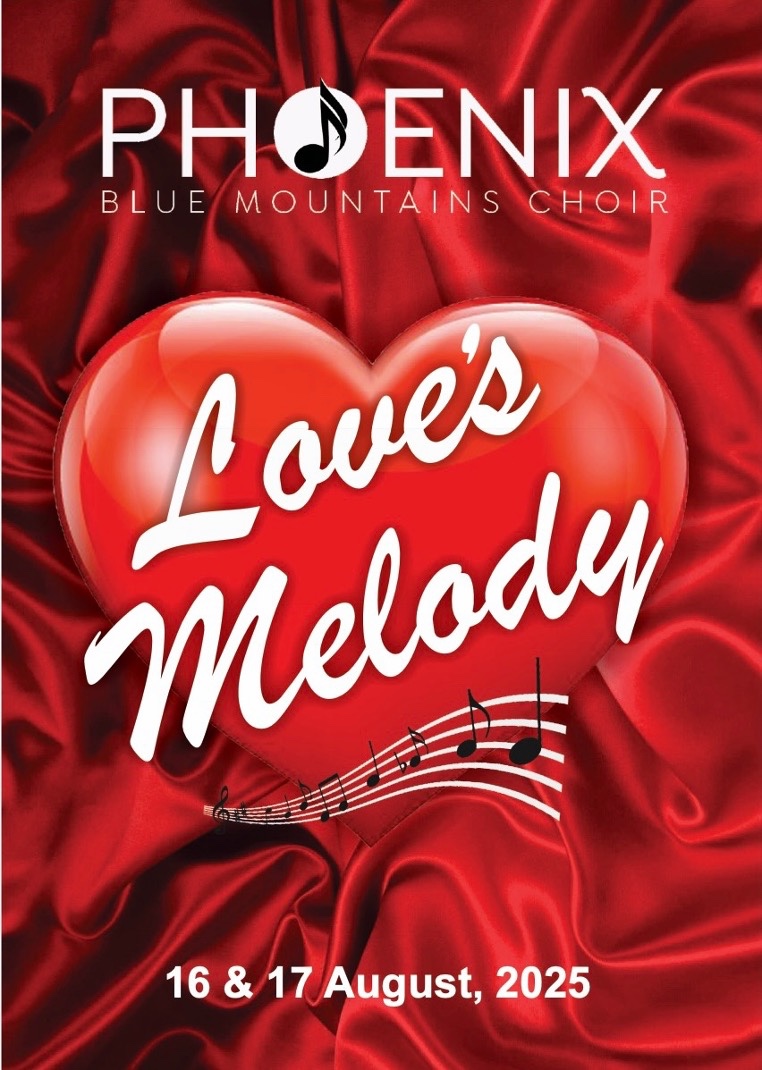
On a chilly August weekend in the mountains, we warmed the hearts of audience and performers alike by painting love in music through the ages. Musical Director, Amy Moore, selected an eclectic mix of works from the 16th century to the present day: sacred Renaissance polyphony; cheeky little madrigals; music by four famous female composers; luscious Romanticism; a Percy Grainger arrangement of an old English folk song; 20th century popular hits … and more!
Our first two works, composed 450 years apart, both drew inspiration from the Song of Songs, a collection of poems from the Hebrew Bible. Jacobus Clemens non Papa was one of the leaders of the polyphonic Flemish style that dominated Renaissance music, his 1550 motet is a vivid contrast to Howard Skempton’s stripped-down, essentials-only musical style from the early 2000s.
We then moved from the sacred to the secular, as the Chamber Choir presented five Renaissance madrigals and motets from the 16th and 17th centuries. Madrigals are commonly perceived as bawdy tales of lusty shepherds and buxom maids, full of metaphor, double entendre, innuendo. Often so, but not always!
From earthly delights to four examples of poetic love … Italian soprano Settimia Caccini, composer of secular songs in the 17th century … Percy Grainger, Australian-born but UK- and US-based pianist, arranger and composer, whose lasting legacy was reviving interest in British folk music … Clara Schumann, German pianist, composer, teacher, wife of Robert Schumann and mother of eight children. Her heartfelt setting of a poem about the constancy of love was a gift to her husband on his 33rd birthday … And American composer and conductor Eric Whitacre, best known for his choral music, full of shimmering, shuddering, shifting harmonies. This Marriage, which sets a love poem by a 13th-century Persian poet, was composed in 2005 for his then wife on the occasion of their 7th wedding anniversary.
No exploration of the diverse nuances of love would be complete without venturing onto the romantic canals of Venice. Indeed, gondolas have been part of the Venetian cityscape from the early Renaissance. Reynaldo Hahn’s melodious and graceful style, Felix Mendelssohn’s sheer romanticism with a touch of the classical, and Clara Schumann’s intertwining melodies all evoke an aura of ethereal romance in the watery city.
And finally, Swingers and friends! Our afternoon had begun with a sacred 16th-century work, and we concluded with love songs at the opposite end of the musical and temporal spectrum. Five foot-tapping hits from the 20th century with elements of jazz, ragtime and honky-tonk … Indeed, a concert with something for everyone!
We were joined by brilliant young soloists Veronica Vella, soprano, and Sebastian Stagg, tenor, at Wentworth Falls School of Arts on Saturday 16 August and at Hoskins Uniting Church Lithgow on Sunday 17 August.
LOVE IN CHURCH
Ego flos campi (Jacobus Clemens non Papa, 1510–1556)
Rise up, my love (Howard Skempton, b 1947)

EARTHLY DELIGHTS
Now is the month of Maying (Thomas Morley, 1558–1602)
Tirsi morir volea (Giaches de Wert, 1535–1596)
Come again! (John Dowland, 1563–1626)
Silentio nocivo (Barbara Strozzi, 1619–1677)
No, no, Nigella (Thomas Morley, 1558–1602)

POETIC LOVE
Due luci ridenti (Settimia Caccini, b 1591)
Brigg Fair (arr Percy Grainger, 1882–1961)
Ich hab’ in deinem Auge (Clara Schumann, 1819–1896)
This marriage (Eric Whitacre, b 1970)

LOVE ON A GONDOLA
Sopra l’acqua indormenzada (Reynaldo Hahn, 1874–1947)
Venetianisches Gondellied (Felix Mendelssohn, 1809–1847)
Gondoliera (Clara Schumann, 1819–1896)

SWINGERS AND FRIENDS
Ain’t misbehavin’ (Fats Waller, 1904–1943)
Encouragements to a lover (Madeleine Dring, 1923–1977)
Song of a nightclub proprietress (Madeleine Dring, 1923–1977)
Begin the Beguine (Cole Porter, 1891–1964)
Sigh no more, ladies (George Shearing, 1919–2011)
 Phoenix Choir
You must be logged in to post a comment.